
TLDR: Showing up in AI Overviews and Google’s People Also Ask isn’t random. It starts with having content structured and thorough enough to even qualify, then requires studying who’s already winning those spots, mapping the real questions buyers are asking, and building content specifically designed to take that spot. Skip any of those steps and you’re publishing blind.
—
A lot of dealers have heard the terms AI Overviews and People Also Ask, know they matter, and have no real plan for showing up in either one. So they publish a blog post, hope for the best, and wonder later why it never gets cited. Getting into these spots isn’t luck. It’s a process, and most dealer content never even gets far enough into that process to have a real shot.
What AI Overviews & People Also Ask Actually Are
Worth clarifying before going any further, since not everyone in the dealership is working with the same definitions.
An AI Overview is the AI-generated summary that shows up at the top of a Google search result, above the normal list of blue links. It answers the question directly, in a few sentences, and cites a handful of sources it pulled the answer from. A buyer can get a full answer without clicking anything.

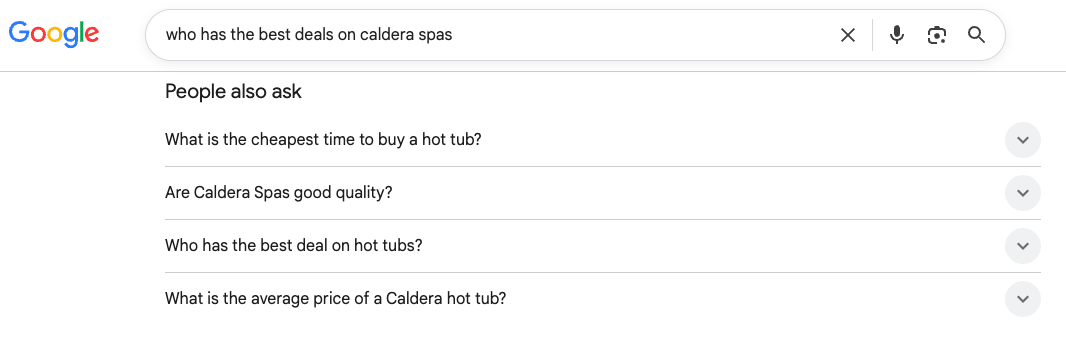
People Also Ask is the expandable box of related questions that shows up within a regular set of search results. Click a question and it opens up with a short answer, pulled from a specific page, along with a link to that source. Both spots sit above or alongside the traditional results, which means they get seen first, whether or not a click ever happens. We’re learning that a lot of the PAA responses these days are being driven by the AI Overview, so I would recommend focusing more on that, than these to begin with.
Step 1: Make Sure Your Content Even Qualifies
Before worrying about winning either spot, the content itself has to clear a basic bar.
It needs to directly and clearly answer a specific question, not dance around it with vague marketing language. It needs real depth, enough detail and context to actually be useful to someone trying to make a decision. Thin, generic content simply doesn’t qualify, no matter how well it’s optimized technically. This is the step most dealer content never gets past. I wrote a post about this last month that you might want to check out.
Karen Martinez, our head of SEO, explains why it’s worth clearing that bar even when it doesn’t lead straight to a click:
“Showing up in AI Overviews and PAA is the next evolution of SEO. We currently live in a world where people want answers to their questions right now and that’s the solution Google has given us. Oftentimes, this will result in no click to the website, but it does give you an opportunity as a business to build brand awareness and score points for being the helpful guide with the goal of bringing them to your website at some point in the near future through recall.
Knowing how to optimize for this, we call it AEO, is absolutely critical for hot tub dealers engaged in SEO and building organic reach.”
Step 2: Study Who’s Already Winning the Spot
Once the content bar is understood, the next move is research. A lot of writers skip this part, thinking they know what it takes to rank in Google. Don’t do that.
Instead, take the actual questions a buyer would ask, financing options, install timelines, energy costs, brand comparisons, and run them through Google. Look at what shows up in the AI Overview. Look at what gets pulled into the People Also Ask box.
Then go a step further than most dealers do. Actually read what’s being cited. How deep is that post. How thorough is the answer. How is the content structured, headers, direct answers up top, supporting detail underneath. Figure out why Google or the AI model chose that specific page as the source.
That’s the blueprint for what needs to be built to compete for the same spot.
Step 3: Map the Real Questions Buyers Are Asking
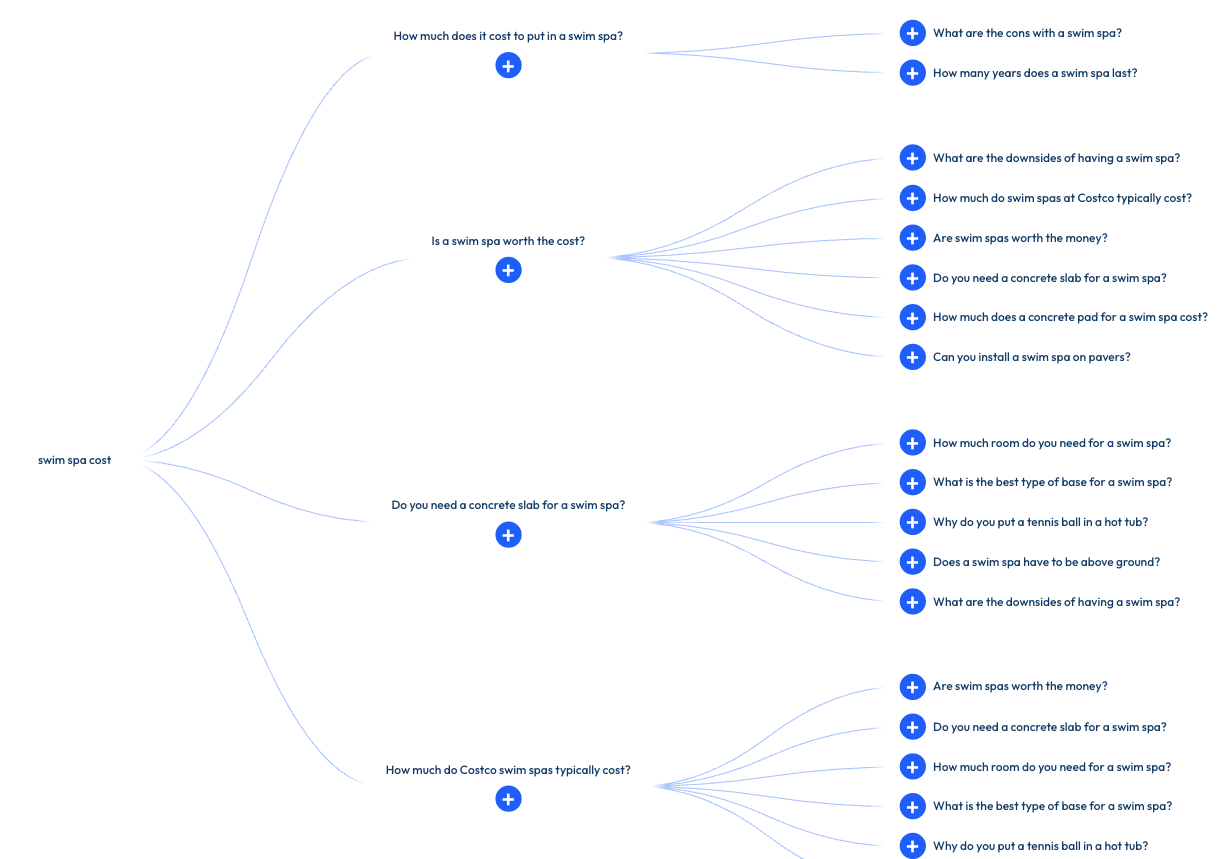
There are two good sources for this. The first is Google’s own People Also Ask box, sitting right there in the search results for any relevant query. The second is AlsoAsked.com, a tool that pulls the most current and complete database of these questions and shows how they fan out into deeper, related follow-up questions.
Starting with a top-level question and drilling into the follow-ups underneath it reveals the full shape of what buyers actually want answered, not just the first, most obvious question they typed. A customer researching “swim spa cost” might also want to know about energy usage, financing terms, and maintenance, and that full question tree is exactly what a strong piece of content should be built to address.
Step 4: Turn the Research Into a Content Strategy
With a clear picture of what qualifies, who’s currently winning, and what the full range of buyer questions looks like, the actual strategy comes together and makes it sooooo much easier to write a great piece of content. Decide which questions to answer, in what order, and how to structure the piece so it goes deeper or is clearer than whatever is currently earning the citation. This is the step that turns research into an actual plan instead of a pile of notes.
Step 5: Write, Structure, and Optimize the Piece
From there, it’s about execution. Build the content around that strategy. Lead with direct, clear answers to the target questions. Back them up with enough depth and detail to be genuinely useful, not just technically present. And optimize it the way any strong SEO content should be optimized, structured headers, clean formatting, and language that matches how buyers are actually asking the question.
A Repeatable Process, Not a Guessing Game
Dealers who treat this as a real process, understand what qualifies, study the competition, map the full question set, and build content specifically to win it, start showing up in exactly the spots where buyers are making decisions. Sometimes that means a click. Often it means brand recall that pays off later, the moment a buyer is ready to act. Either way, it’s the difference between publishing content and hoping, and publishing content built to actually compete for the spot.
FAQs
What is an AI Overview in Google search?
An AI Overview is the AI-generated summary that appears at the top of Google’s search results, directly answering the query and citing a small number of sources it pulled the answer from.
What is Google’s People Also Ask feature?
People Also Ask is a box of related, expandable questions shown within regular search results. Clicking a question reveals a short answer pulled from a specific page, along with a link to that source.
What does it take for content to qualify for AI Overviews or People Also Ask?
Content needs to directly and clearly answer a specific question, with enough depth and detail to be genuinely useful. Thin or vague content rarely clears this bar, regardless of technical optimization.
What is AlsoAsked.com and how is it different from Google’s People Also Ask box?
AlsoAsked.com pulls a broader, more current database of People Also Ask style questions and shows how they fan out into deeper follow-up questions, giving a fuller picture of what buyers want answered beyond what’s visible in a single Google search.
Does ranking in traditional SEO guarantee I’ll show up in AI Overviews too?
No. Strong traditional rankings help, but AI Overviews and People Also Ask depend on separate factors, mainly how directly and thoroughly the content answers the specific question being asked.

Greg is the founder and CEO of Stryde and a seasoned digital marketer who has worked with thousands of businesses, large and small, to generate more revenue via online marketing strategy and execution. Greg has written hundreds of blog posts as well as spoken at many events about online marketing strategy. You can follow Greg on Twitter and connect with him on LinkedIn.
